






Mirage XPO Enclosed Trailers for Sale in Oregon
Everything You Need. Nothing You Don’t.
Some buyers want an enclosed trailer without turning the purchase into a complicated research project. Mirage XPO is designed for that buyer. It delivers practical cargo space for everyday work, recreation, moving, property projects, and small-business use—without requiring you to sort through an overwhelming list of models and customization choices.
Oregon Trailers makes it easier to find a Mirage XPO enclosed trailer at our Coburg, Scappoose, and Terrebonne locations and get local help before and after your purchase. Tell us what you plan to haul, how much it weighs, and what vehicle you use for towing. Our team can help you compare current units, understand the important specifications, and choose a trailer that fits your needs.
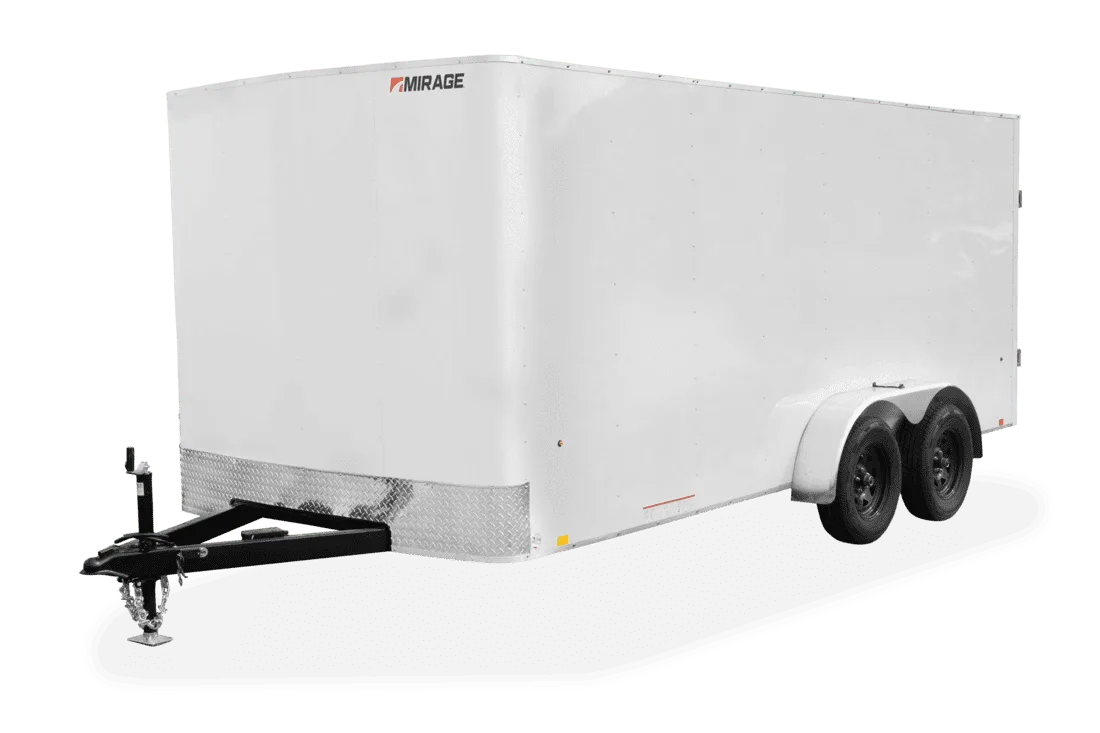

What Is a Mirage XPO Enclosed Trailer?
Mirage XPO is a practical enclosed trailer line created for buyers in the western United States and western Canada. It is intended to provide the core utility many owners need for everyday hauling while keeping the selection and purchase process straightforward.
That simplicity is intentional. It is designed for people who want useful enclosed cargo space, a practical purchase price, and a clear path from shopping to ownership. The goal is to help you buy the trailer you need without paying for specialized features or customization that may not add value to the way you haul.
Who Is Mirage XPO Built For?
Mirage XPO is designed for buyers whose needs are practical and clearly defined. You may need to protect tools from weather, transport a motorcycle, organize supplies for a service business, move household items, or keep project equipment together. You may not need extensive interior upgrades, specialized finishes, or a long list of factory options.
The right trailer still depends on your cargo, weight requirements, tow vehicle, frequency of use, and loading needs.
First-Time Enclosed Trailer Buyers
Buying your first enclosed trailer can feel complicated because several important decisions must be made at once. You need to consider trailer dimensions, cargo weight, GVWR, payload, towing capacity, access, loading clearance, hitch equipment, and electrical connections. Mirage XPO is intended to make the product-selection side of that process easier by offering a more focused range of choices.
A first-time buyer can begin with a few basic questions: What will go inside the trailer? What is the heaviest expected load? How often will it be used? Which tow vehicle will pull it? Once those details are clear, the Oregon Trailers team can help you compare the current Mirage XPO units that may fit.
This can be a useful starting point for buyers who value guidance and confidence but do not require a heavily customized trailer.
Contractors and Tradespeople
An enclosed trailer can help contractors transport tools, materials, supplies, and smaller equipment while keeping those items together between jobs. The enclosed body also creates a mobile storage space that can reduce repeated loading and unloading at the beginning and end of the workday.
A Mirage XPO may make sense as a first contractor trailer, a replacement for an aging unit, or an additional trailer for a growing crew. The best choice depends on the weight and dimensions of your tools and materials, how frequently you tow, and how you prefer to load and organize your equipment.
Before selecting a work trailer, confirm the unit’s payload capacity, interior dimensions, door configuration, tie-down provisions, and access points. Buyers with demanding commercial requirements or specialized build-out plans may be better served by a more customizable trailer line.
Small-Business Owners
For many mobile and service businesses, an enclosed trailer can function as transportation, organized storage, and a visible extension of the company. It allows tools, products, and supplies to remain together instead of being repeatedly transferred between a garage, truck bed, storage unit, and jobsite.
Mirage XPO may be useful for businesses such as:
- Mobile detailing
- Pressure washing
- Handyman services
- Lawn care and landscaping
- Event setup
- Local delivery
- Property maintenance
- Cleaning services
- Mobile repair
- Vendor and market operations
Think about how the trailer will support your daily workflow. Consider shelving or storage plans, equipment clearance, door access, load distribution, security, and the total weight of everything you expect to carry. Confirm that any planned interior additions remain within the trailer’s capacity.
Motorcycle, ATV, and Recreation Buyers
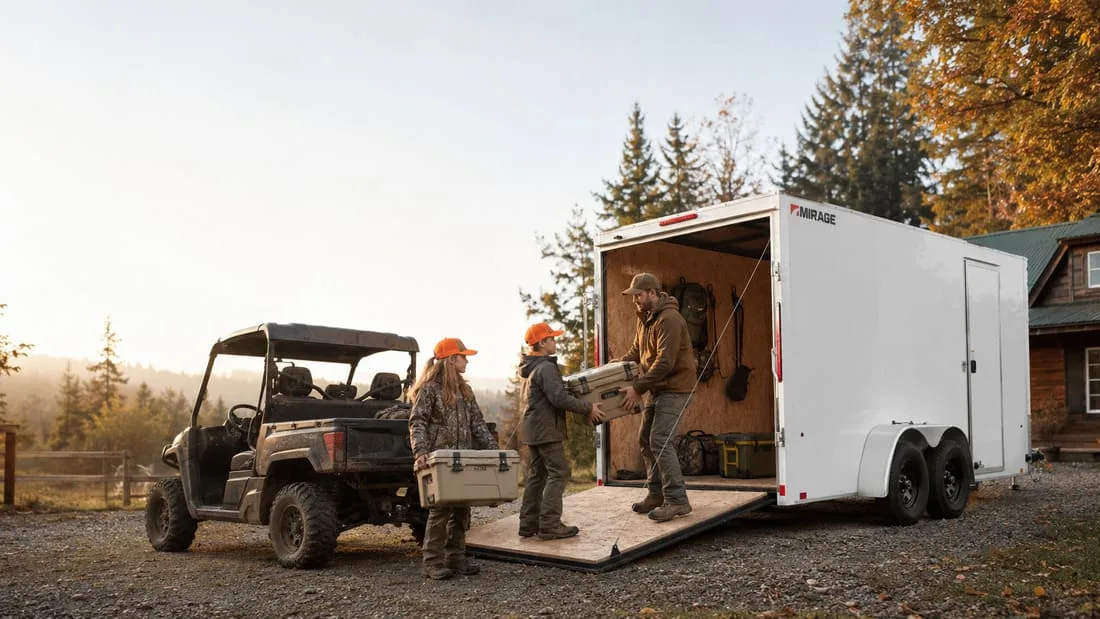
An enclosed trailer can protect motorcycles, camping equipment, hunting gear, riding equipment, tools, spare parts, and other recreational cargo while traveling or storing it between trips. It can also give owners room to keep helmets, ramps, apparel, coolers, and accessories together.
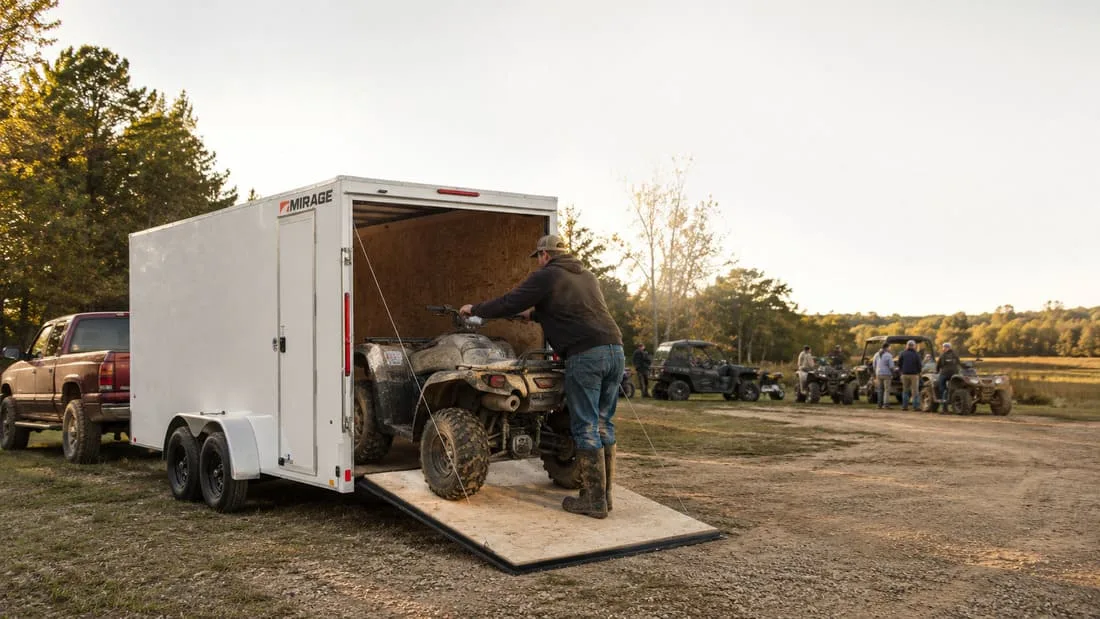
A trailer should never be selected for a motorcycle or ATV based on its outside size alone. Measure the machine and confirm the trailer’s usable interior length, width, height, door opening, loading angle, payload capacity, and tie-down locations. You must also account for extra gear and maintain appropriate weight distribution.
Compatibility depends on the exact vehicle and trailer. Ask Oregon Trailers to help you confirm whether a current Mirage XPO unit has the necessary space, loading configuration, capacity, and securement provisions.
Common Uses for Mirage XPO Enclosed Trailers
The advantage of an enclosed cargo trailer is not limited to one profession or activity. The same trailer may carry work tools during the week, home-project supplies on Saturday, and recreational gear during the next trip.
Start with your primary use, then consider the other jobs the trailer may need to handle over time. This helps you choose enough capacity and usable space without paying for more trailer than you are likely to use.
Work and Jobsite Hauling
An enclosed trailer keeps tools, supplies, and job materials in one transportable space. This can make it easier to prepare for a job, stay organized during the workday, and clear a site when the work is complete. An enclosed body also offers more protection from rain, dust, road debris, and casual visibility than an open trailer.
Organization matters as much as capacity. Think about where frequently used tools will go, how you will move through the interior, and whether rear or side access is important. Any shelving, cabinets, partitions, or equipment mounts should be planned around the trailer’s structure, payload capacity, and weight distribution.
For regular commercial use, leave room for the job that is slightly larger than your typical project. A trailer that is filled to its practical limit every day may become difficult to organize and may leave little flexibility as your equipment needs change.
Landscaping and Property Maintenance
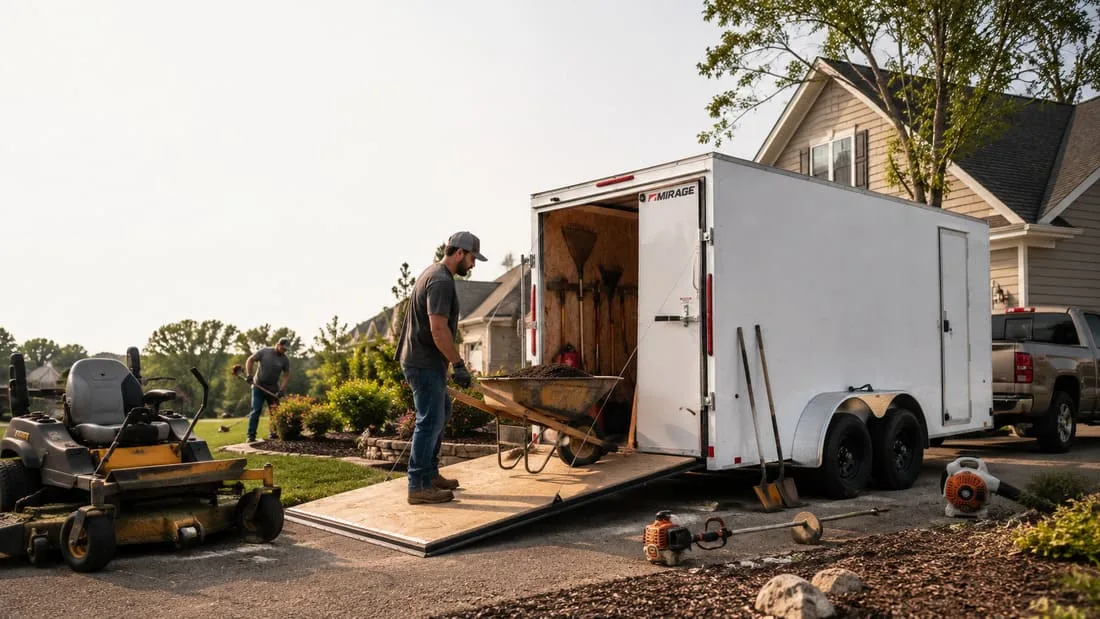
Landscaping and property-maintenance businesses often carry a combination of hand tools, trimmers, blowers, fuel containers, treatment supplies, safety equipment, and job materials. An enclosed trailer can keep smaller equipment organized and reduce exposure to weather while traveling between properties.
Before buying, create a complete list of what will travel inside. Include containers, spare equipment, tool racks, maintenance supplies, and anything that may be added during the busy season. Then confirm the total expected weight and the clearance needed to load and remove each item safely.
Do not assume a particular mower, machine, or powered unit will fit. Measure the equipment and verify the exact interior dimensions, door opening, loading angle, payload, and securement setup of the trailer under consideration.
Motorcycle and Powersports Transport
A properly selected enclosed trailer can help protect a motorcycle or compatible powersports vehicle while providing room for riding gear, tools, spare parts, and travel supplies. Enclosed transport may be especially useful for longer trips, changing weather, overnight stops, or owners who prefer to keep their equipment out of direct view.
The most important factors include:
- Usable interior length, width, and height
- Rear opening dimensions
- Ramp or loading-door configuration
- Loading angle and ground clearance
- Trailer payload
- Machine weight
- Tie-down locations
- Space for straps and safe movement
- Tow-vehicle capacity
Measure the machine at its widest, tallest, and longest points. Account for mirrors, handlebars, windshields, racks, accessories, and any additional cargo.
Moving and Household Projects
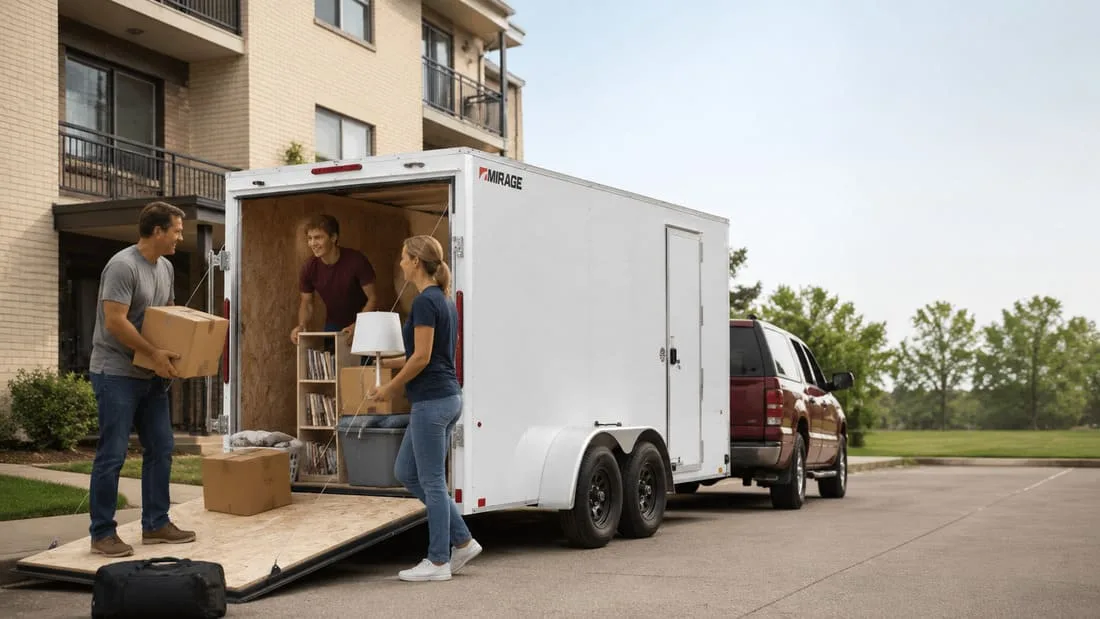
An enclosed cargo trailer can help with local moves, furniture purchases, appliance transportation, estate cleanouts, renovation projects, and seasonal storage. The walls and roof provide more protection than an open trailer, and the enclosed space can make it easier to arrange boxes and household items.
Large furniture may fit by floor dimensions but still be difficult to load through the door opening. Measure the cargo as well as the trailer’s access points. Leave room for moving blankets, straps, protective materials, and balanced loading.
Appliances, building materials, books, tile, tools, and other dense cargo can add substantial weight before the trailer appears full. Review payload capacity carefully and avoid estimating weight based on volume alone.
Mobile Business Use
A cargo trailer can serve as the operational center of a mobile business. Equipment, inventory, products, cleaning supplies, event materials, and tools can remain organized and ready to travel. This may reduce setup time and help owners create a more repeatable daily process.
Choose a trailer based on the business at full working capacity—not just the equipment you own today. Consider future tools, storage systems, generators, water tanks, products, consumables, or other additions. Some equipment can add significant weight, and modifications may affect the trailer’s usable payload or warranty.
Before completing a business build-out, confirm the trailer’s specifications and discuss the planned use with qualified trailer, equipment, and installation professionals.
Why Buyers Choose Mirage XPO
Mirage XPO is built around a clear idea: many buyers need a useful enclosed trailer, not an endless configuration process. Its value comes from combining everyday hauling capability with a more focused buying experience and support from a local dealership.
Practical Features Where They Matter
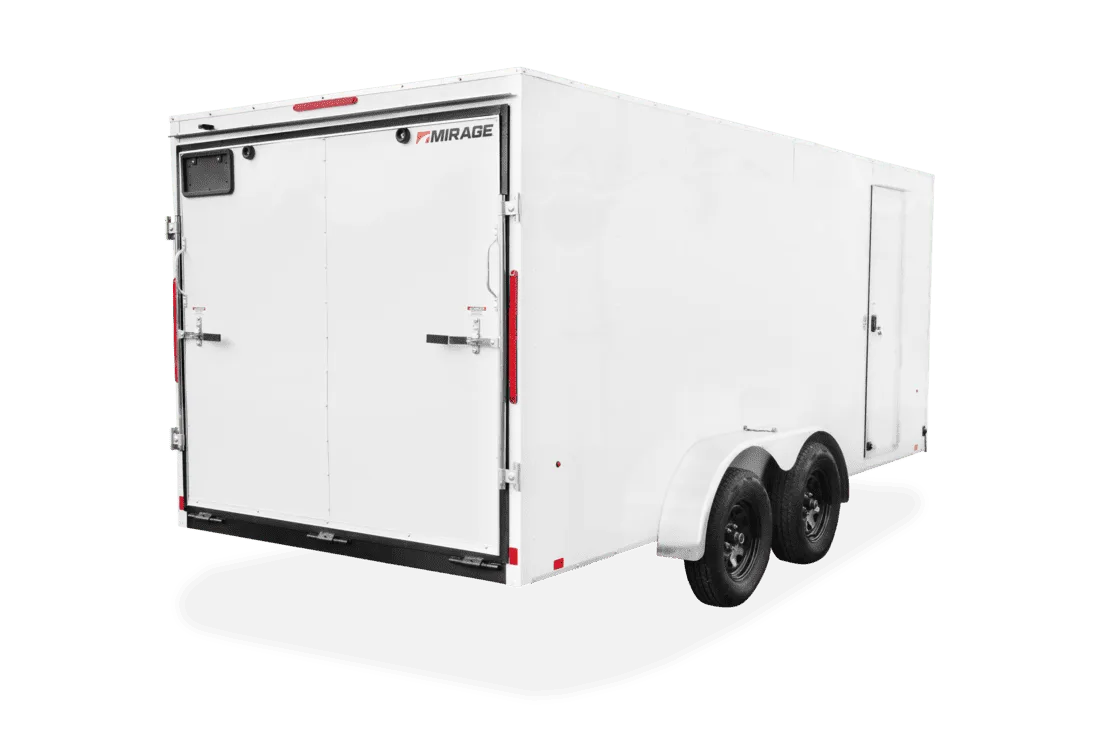
Mirage XPO is intended to provide the basic utility expected from an enclosed cargo trailer. Depending on the current production unit, that may include enclosed cargo protection, practical loading and access, road-ready construction, and a configuration chosen around common hauling applications.
Accessible Value
Value is not simply the lowest advertised number. A trailer provides value when it fits the load, works with the tow vehicle, supports the owner’s intended use, and avoids charging for capabilities that will not be used.
Mirage XPO is intended to provide an accessible entry point for buyers who need core enclosed-trailer utility without a highly specialized configuration. That may appeal to first-time owners, occasional haulers, growing businesses, and buyers replacing a basic work trailer.
How to Choose the Right Mirage XPO Trailer
Choosing an enclosed trailer begins with your cargo—not with a model name or advertised price. A trailer that is too small can be frustrating and unsafe to load. A trailer that is substantially larger or heavier than necessary may cost more, require a different tow vehicle, and be harder to store or maneuver.
Use the following process to narrow your choices before comparing current Mirage XPO inventory.
Start with What You Will Haul
Identify the trailer’s primary purpose. A contractor carrying tools has different needs from a homeowner moving furniture or a rider transporting a motorcycle.
Ask:
- What will the trailer carry most often?
- What is the largest item?
- What is the heaviest expected item?
- What is the estimated total loaded weight?
- How often will the trailer be used?
- How far will it typically travel?
- Will cargo be loaded by hand, rolled in, or moved with equipment?
- Is the trailer mainly for work, recreation, moving, or business?
- Will the cargo change over the next several years?
Make a list of the complete load, including tools, storage systems, fuel, spare parts, supplies, straps, ramps, and accessories.
Measure Your Cargo
Measure the cargo instead of relying on a general description. Two motorcycles, mowers, appliances, or tool setups can vary substantially.
Confirm:
- Overall cargo length
- Overall cargo width
- Overall cargo height
- Door-opening clearance
- Ramp or loading clearance
- Ground clearance where applicable
- Room for tie-down straps
- Room to move safely around the cargo
- Space needed for balanced weight distribution
The trailer should provide usable loading room, not merely enough floor area for the cargo to fit on paper.
Check Weight Ratings
Several weight figures work together when selecting a trailer.
GVWR: Gross Vehicle Weight Rating is the maximum allowable loaded weight of the trailer, including the trailer itself and everything carried inside or on it.
Empty trailer weight: This is the trailer’s own weight before cargo, accessories, equipment, and owner-installed components are added.
Payload capacity: Payload is the amount of weight the trailer can carry. It is generally determined by subtracting the trailer’s empty weight from its GVWR, but buyers should use the manufacturer’s unit-specific documentation.
Tongue weight: Tongue weight is the downward force the loaded trailer places on the hitch. It changes based on cargo weight and placement.
Tow-vehicle capacity: The vehicle must be rated and properly equipped to tow the actual loaded trailer. Vehicle towing limits may depend on engine, drivetrain, axle ratio, hitch, brakes, passengers, cargo, and other factors.
Never assume that a trailer’s GVWR is the amount of cargo it can carry. Confirm the payload of the specific unit and compare it with the expected real-world load.
Consider Loading and Access
A trailer can have enough interior space but still be inconvenient for your application if the access points do not match the cargo.
Depending on the current unit, evaluate:
- Rear ramp or cargo-door configuration
- Rear opening dimensions
- Side-door location and dimensions
- Interior standing clearance
- Fenders or wheel-box intrusion
- Tie-down location
- Loading angle
- Door swing clearance
- Space required to open doors at home or on a jobsite
Think through the entire loading process. Where will the trailer be parked? Can the rear door or ramp open fully? Can frequently used tools be reached through a side door? Will cargo block access to other items?
Confirm Your Tow Vehicle and Equipment
Review the tow vehicle’s owner documentation and rating information for your exact configuration. Confirm that the vehicle, hitch, ball mount, coupler, wiring, tires, brakes, and related equipment are appropriate for the trailer and its expected loaded weight.
A salesperson can help you identify trailer specifications, but the vehicle manufacturer’s ratings and applicable requirements remain essential. Seek qualified assistance when you are uncertain about towing compatibility or equipment setup.
Confirm the Current Production Configuration
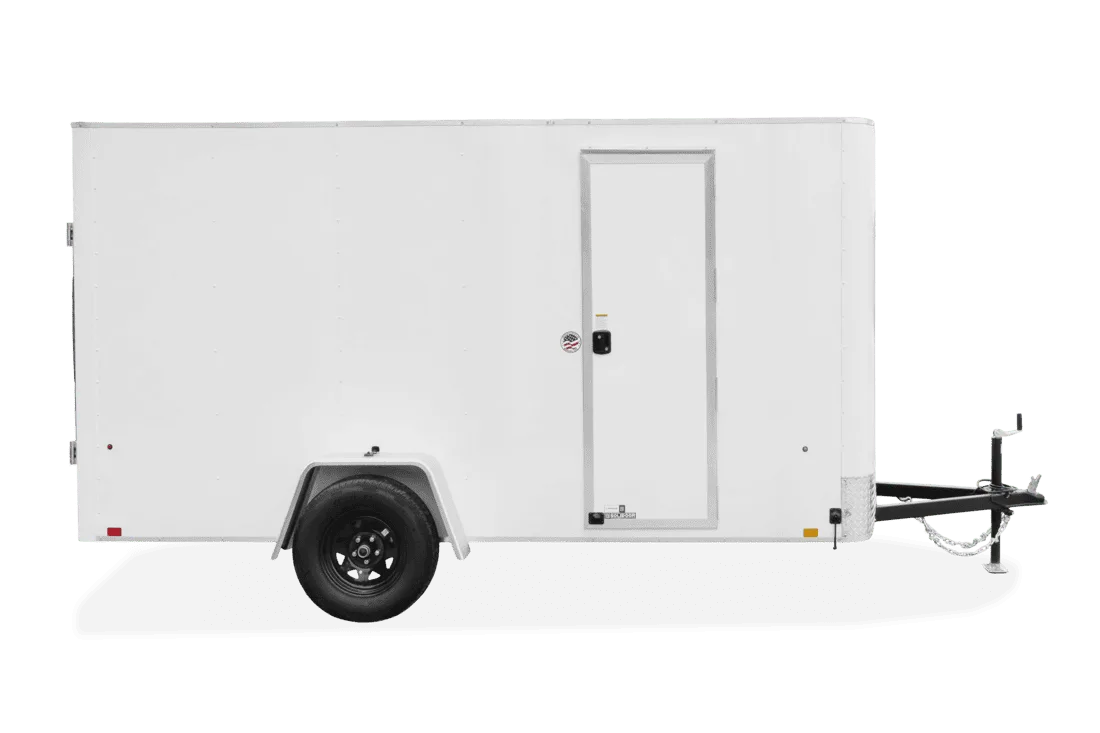
Mirage XPO is designed to allow production flexibility, so specifications and included features should always be confirmed at the unit level. Do not rely on an older Mirage product page, an image of another trailer, or a general brand description as the final source of truth.
Before purchasing, verify:
- Model and serial information
- Interior and exterior measurements
- GVWR
- Empty weight
- Payload
- Axle setup
- Tires and wheels
- Braking equipment
- Rear and side access
- Flooring, wall, and roof materials
- Tie-down provisions
- Interior equipment
- Exterior color
- Included accessories
- Warranty coverage
- Price and fees
- Stock and pickup status
Mirage XPO vs. a More Customizable Enclosed Trailer
Mirage XPO is not intended to replace every type of enclosed trailer. Some buyers need a simple cargo solution. Others require specialized construction, commercial options, custom dimensions, premium finishes, or a highly specific interior.
Use your intended application to decide which buying path is more appropriate.
| Mirage XPO may be right when… | A more customizable trailer may be better when… |
|---|---|
| You want a practical entry point | You require specialized options |
| You prefer fewer purchasing decisions | You want extensive customization |
| Your hauling needs are straightforward | You have demanding commercial requirements |
| You value a fast, simple comparison process | You want to select materials, finishes, and upgrades |
| You need core enclosed-cargo utility | You need a highly specific configuration |
| You are buying your first enclosed trailer | You have detailed experience-based specifications |
| You want to compare available units locally | You are planning a specialized factory order |
The better choice is the one that fits your work, cargo, towing setup, and budget. Paying for options you will not use does not add value, but choosing too little trailer for a demanding application can create limitations later.
Not sure which category fits? Talk with a trailer specialist at Oregon Trailers.
Enclosed Trailer Buying Checklist
Bring this checklist when comparing Mirage XPO trailers or any enclosed cargo trailer.
Cargo and Use
- Identify the trailer’s main purpose.
- List everything you expect to carry.
- Measure your largest item.
- Estimate the heaviest total load.
- Include tools, supplies, racks, accessories, and future equipment.
- Decide how frequently and how far you will tow.
Trailer Fit
- Confirm usable interior length, width, and height.
- Measure rear and side door openings.
- Review ramp or loading-door configuration.
- Check loading angle and ground clearance.
- Confirm tie-down needs and locations.
- Leave room for safe cargo access and securement.
Weight and Towing
- Review the trailer’s GVWR.
- Confirm its empty weight.
- Confirm its payload capacity.
- Review expected tongue weight.
- Check the tow vehicle’s ratings.
- Confirm hitch, coupler, ball mount, wiring, and brake-control needs.
- Account for passengers and cargo carried in the tow vehicle.
Unit Details
- Ask what is included with the specific production unit.
- Confirm axle, tire, wheel, and brake information.
- Review flooring, walls, roof, and exterior materials.
- Verify exterior color and installed equipment.
- Review applicable warranty documentation.
- Inspect the actual trailer or current unit photos.
Purchase and Ownership
- Request the complete current price information.
- Ask about financing options.
- Discuss possible trade-in value.
- Consider a spare tire.
- Review locks and security products.
- Ask about appropriate tie-down equipment.
- Confirm hitch and electrical accessories.
- Ask about available parts and service.
- Confirm inventory status and expected pickup timing.
This checklist is general buying guidance. Unit compatibility, towing suitability, and legal requirements depend on the specific trailer, tow vehicle, load, equipment, and jurisdiction.
Current Mirage XPO Sizes, Models, and Inventory
Mirage XPO offerings can change by production run and availability, so current Oregon Trailers inventory is the best source of truth for sizes, models, and configurations. Open an individual listing to review the unit, then confirm its interior dimensions, door openings, GVWR, payload, axle configuration, included features, price, and stock status with the dealership.
Financing, Trade-Ins, Parts, and Service
A trailer purchase includes more than selecting the trailer itself. Financing, hitch equipment, securement products, replacement parts, maintenance, and future support can all affect the ownership experience. Oregon Trailers provides local paths for these needs from its Coburg, Scappoose, and Terrebonne locations.
Trailer Financing
Financing options may be available for qualified customers. Use the Oregon Trailers financing page to review the current application pathway and participating programs.
Approvals, rates, terms, down payments, fees, and payment amounts depend on the applicant, lender, trailer, and program available at the time of purchase. Submitting an application does not guarantee approval.
Trade-Ins
Have a trailer you no longer need? Oregon Trailers may be able to evaluate it as a potential trade-in. Provide accurate information about its manufacturer, model, year, dimensions, condition, ownership status, and installed equipment.
Trade-in availability and value depend on inspection, condition, market factors, documentation, and dealership acceptance.
Parts and Accessories
The right accessories can make a trailer easier to tow, secure, load, and use. Depending on your setup and current availability, you may want to discuss:
- Hitch components
- Ball mounts
- Electrical connectors
- Spare tire and mounting equipment
- Wheel locks and cargo locks
- Tie-down straps
- Compatible securement equipment
- Trailer electrical accessories
- Replacement lighting components
- Maintenance items
- Other use-specific accessories
Confirm that every accessory is properly rated and compatible with the trailer, tow vehicle, cargo, and intended use.
Local Service Support
Buying from a local dealership gives you a nearby point of contact when you need available maintenance, replacement parts, accessory assistance, or trailer support.
Services and scheduling can vary. Contact the Oregon Trailers service department to discuss your trailer, requested work, parts availability, and appointment timing.
Why Buy Mirage XPO from Oregon Trailers?
Oregon Trailers gives Mirage XPO buyers a local place to compare trailers, ask questions, and get help matching a current unit to the way they plan to haul. With locations in Coburg, Scappoose, and Terrebonne, the dealership is convenient for shoppers from Eugene, Springfield, Salem, Albany, Portland, Bend, Redmond, and communities across Oregon.
Instead of relying only on a broad online description, you can review current inventory and discuss the details that affect real-world use: cargo dimensions, loaded weight, payload, door access, towing capacity, hitch equipment, financing, accessories, and available support.
Reasons to shop at Oregon Trailers include:
- Three convenient Oregon locations: Coburg, Scappoose, and Terrebonne
- Current inventory available to review
- Local product guidance
- Help comparing sizes and weight ratings
- Assistance evaluating intended use
- Financing pathways
- Potential trade-in opportunities
- Parts and accessories
- Available service support
- Help preparing for the complete towing setup
- Local assistance before and after the sale
Frequently Asked Questions
What is Mirage XPO?
Mirage XPO is positioned around simplicity and accessible value rather than extensive customization. Specifications and included equipment may vary by unit, production run, or region, so current inventory should be used as the source of truth.
Is Mirage XPO a good first enclosed trailer?
The correct trailer still depends on what you plan to haul, the cargo’s dimensions and weight, your loading needs, and your tow vehicle. First-time buyers should review those factors with a trailer specialist rather than selecting a trailer based only on price or outside dimensions.
What Mirage XPO sizes are available?
Open the individual inventory listing to review the current unit, then confirm its interior dimensions, door openings, GVWR, payload, axle configuration, included features, price, and stock status with the dealership.
Can I use a Mirage XPO trailer for contractor work?
Create a full list of what you expect to carry and estimate the total loaded weight. Buyers with demanding commercial use, specialized interior plans, or highly specific equipment requirements may need a more customizable trailer.
Can a Mirage XPO trailer be used for landscaping?
Measure all equipment, including its widest and tallest points, and confirm loading clearance, interior dimensions, payload, access, securement provisions, and tow-vehicle capacity. Do not assume a particular mower or machine will fit without checking the current unit.
Can a Mirage XPO haul a motorcycle?
Confirm the motorcycle’s dimensions and weight, including installed accessories. Then review the trailer’s opening, interior clearance, loading system, tie-down provisions, payload, and compatibility with the tow vehicle.
Can a Mirage XPO haul an ATV?
Ask Oregon Trailers to compare your machine’s measurements with a current Mirage XPO unit before making a purchase.
Can I use a Mirage XPO trailer for moving?
Remember that books, appliances, tile, tools, and building materials can become heavy before the trailer appears full. Confirm payload and loaded weight rather than choosing by cargo volume alone.
Can I finance a Mirage XPO trailer?
Review the current financing page or contact the dealership for up-to-date information. No rate, payment, term, or approval should be assumed until provided by the applicable lender.
Can I trade in my current trailer?
Submit your trailer information or contact the dealership to learn about the current appraisal process.
Does Mirage XPO come with a warranty?
Do not rely on warranty language from an older Mirage trailer or another production unit.
Are Mirage XPO specifications always the same?
Review the current inventory listing and confirm all important details with Oregon Trailers. The actual unit and its associated documentation should be treated as the final source of product information.
What should I bring when shopping for an enclosed trailer?
The more specific you can be about your intended use, the easier it will be to identify an appropriate trailer.